Excellent Q1 ‘26 Results for LEEF, and Major Future Growth on the Way
LEEF Brands reported strong margin and EBITDA growth despite flat revenue, driven by low-cost in-house cannabis cultivation and extraction efficiencies. Management highlighted expanding farm capacity, potential benefits from U.S. cannabis rescheduling, and strategic acquisitions positioning the company for scalable growth, stronger cash flow, and possible interstate or export opportunities ahead.
We are going to dissect some discussion that took place after LEEF Brands (CSE: LEEF) OTCQB: LEEEF) announced its Q1 ‘26 financial results. We will pull out some of the highlights, including the California cannabis extraction leader’s operational improvements; steep margin growth; near-term farm expansion and its impacts; the acquisition of a retail brand; and the possibility of using California as a base to export product following the expected federal rescheduling of cannabis.
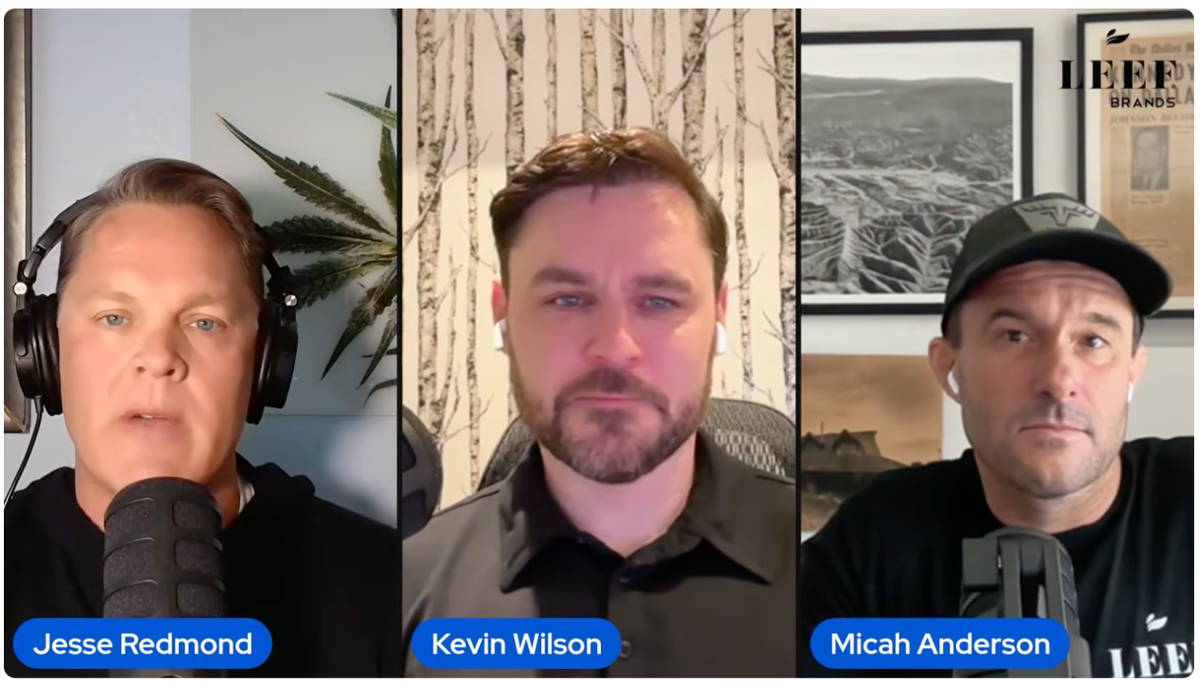
You can watch the whole discussion, between the LEEF’ CEO Micah Anderson, CFO Kevin Wilson, and Chief of Strategy/Investor Relations Jesse Redmond, here.
Key Highlights from the Press Release
First, just an overview of the results pulled directly from the press release.
- Revenue: $9.4 million, consistent with $9.4 million in Q1 2025, reflecting a 60% increase in unit volumes, offset by pricing pressure in the California distillate market.
- Gross Margin: 49%, compared to 22% in Q1 2025. Margins more than doubled due to lower input costs from increased use of in-house biomass from Salisbury Canyon Ranch and increased output from our higher-margin hydrocarbon line.
- Gross Profit: $4.6 million, compared to $2.1 million in Q1 2025, driven by significant margin expansion as the Company scaled its vertically integrated operating model.
- Adjusted EBITDA: $2.4 million, compared to $(0.7) million in Q1 2025, driven by higher gross margins and a 16% year-over-year decline in operating expenses.
- Operating Cash Flow: $0.4 million, compared to $(1.8) million in Q1 2025. Operating cash flow included approximately $1.2 million of California Department of Cannabis Control (DCC) licensing fees and other seasonal startup costs paid in cash during the quarter; excluding this timing impact, the Company would have generated approximately $1.6 million in operating cash flow and positive free cash flow.
Interesting Points from the Video
The video is a good discussion, clocking in at about 42 minutes. Definitely worth your time to get the full picture. Here are the main takeaways from our point of view for those looking for a little shortcut.
Heavy Demand and How to Meet It
~3:20 mark: Micah Anderson states “We're still leaving about a million dollars of
opportunity a month at least on the table just by not being able to keep up with the demand that we're seeing which is a good problem to have but it is a problem.”
Anderson goes on to talk about the two ways he sees capacity improving to meet unmet demand. First, LEEF has 180 acres permitted for cannabis farming on its wholly-owned Salisbury Canyon Ranch. The company planted and harvested twice last year on the initial 65 acre section and is expanding the operation this year. Anderson expects the full 180 acres to be planted by 2027.
The second avenue toward increasing capacity is through the efficiency of the whole operation. Historically the company has purchased feedstock for its extraction systems through a patchwork of growers throughout California. Each batch performs differently during the process, meaning there is a learning curve that must be repeated each time with different equipment settings and product outcomes. LEEF has found in this first stage of growing its own feedstock that there are tremendous efficiencies realized by providing large batches of genetically identical plants. The company will also learn which strains grow best in which parts of the ranch, and which strains produce the best results in which of its three types of extraction lines (hydrocarbon, ethanol, and solventless).
Dramatically Decrease in Cost of Raw Materials
~6:33 mark: Jesse Redmond states “Historically, we've been sourcing pounds for extraction for anywhere from $20 on the low end up to $40 or $50 on the high end. And at Salisbury Canyon Ranch, Kevin, we're, you know, growing at a fraction of that cost. I think last quarter or last year, last season, we came in around $8 a pound. So, you know, more than 50% lower than we've typically been sourcing.”
This is the biggest reason for the dramatic increase in profit margin: integrating its own cultivation into the equation. And LEEF isn’t done, with the pending planting of the whole 180 licensed acres at the Ranch. Anderson mentions “...this is our first year. You know, we got pounds under $10. That was our goal. We achieved the goal. But I definitely see a path forward where it's like, man, we could get this down five bucks.”
Anderson points to more automated and mechanized means of harvesting that have only recently been allowed by Santa Barbara County as a key driver of anticipated efficiency gains.
The Implications of Federal Rescheduling
~10:20 mark: Anderson talks about federal rescheduling and LEEF’s preparations for it, saying “The other kind of wildcard exciting thing that's happening right now is like what happens if we're able to start shipping some of this stuff into other markets.California is like hands down, I think, the worst market in the entire world when it comes to concentrate pricing. And we're and we're winning right now in that market. So, that's what I'm excited about.” Later he adds “You know, do we get to start shipping sooner than later or is this going to be like, no, this is going to take years to sort out. We don't know. We're just But we're doing everything that we can to figure it out, make sure that we're positioned for it.”
He is referencing the Trump Administration’s decision to move medical cannabis from a Schedule I narcotic to a Schedule III drug. There is a hearing in June to consider rescheduling all cannabis, not just medical. And it appears that for now congressional action would be required to allow interstate transport of medical cannabis under the current rules.
But LEEF, and the industry at large, welcome the schedule change and look forward to the potential easing of other restrictions. In all of this discussion it is noted that distillate sells for about $0.80 - $1 per gram, while other legal states show prices ranging from $2 - $10 per gram. If interstate commerce does come to pass, LEEF is positioned very well to take advantage from its dominant position in the flagship California cannabis market.
Acquisition of the Himalaya Retail Brand
~ 21:00 mark: Anderson discusses the company’s recent acquisition of Himalaya, saying “...you look at their P&L in 2025, kind of a break even business, $6 million in revenue, but you layer on our cost of concentrates on top of their concentrate business, and all of a sudden they're highly profitable, cash flow positive immediately, day one, the second that you start giving them concentrates at our cost. I'm not saying we're going to go ham on that strategy and start rolling in every brand. That's not what I'm saying. We're staying laser focused on getting this farm done, but we're not ignoring it. You know, we are exploring other ways to maximize the value of this infrastructure that we have in California.”
The Upshot
There is much more in the video, including further discussions of the impact of rescheduling, and the importance of the California market on the national and global stage. But the gist is this: the cannabis industry has had its ups and downs but is a multi-billion dollar industry in which well-run companies can thrive. LEEF Brands appears to be one of those companies. After years of investing in the Salisbury Canyon Ranch with the goal of integrating its own low-cost pesticide-free production into its extraction business, LEEF is beginning to reap the benefits of that bold move. The company’s goal is to become the world’s leading producer of extracted cannabis products and it is working inexorably toward that goal. Keep an eye on further news from the company.
Author’s Disclosure: This article reflects the author’s independent analysis and personal views. It is not affiliated with or endorsed by any of the companies mentioned or any related party. The content is provided for informational purposes only and should not be considered financial or investment advice. Readers are encouraged to conduct their own independent research and due diligence before making any investment decisions.
This article reflects personal research and opinions and is provided for informational purposes only. It is not financial advice, a recommendation to buy or sell any security, or a consideration of your individual circumstances. Investing in small-cap and pre-commercialization companies involves significant risk, including the risk of total loss. Always do your own research and consider speaking with a qualified financial professional before making investment decisions.
Stay Informed with The Wire
Get the latest insights and analysis on public companies delivered directly to your inbox.