The Cannabis Pivot: Strategic Resilience in a New Regulatory Era
The American cannabis industry is shifting toward a disciplined, institutional phase as federal rescheduling nears. Backed by President Trump’s recent signals of legitimacy, the sector is moving toward a "bulletproof" legal framework. LEEF Brands is leading this transition through its vertically integrated Salisbury Canyon Ranch, achieving industry-low $8 per pound biomass costs. With surging margins and expansion into New York, LEEF’s operational efficiency positions it for significant valuation growth.
The American cannabis industry is currently witnessing a historic realignment, characterized by a shift from speculative volatility toward a disciplined, policy-driven landscape. This evolution was punctuated in April 2026 when President Trump, appearing alongside popular podcaster Joe Rogan, signaled that federal legitimacy is no longer a question of "if," but "when". Imminent rescheduling places institutional-grade operators like LEEF Brands, Inc. (CSE: LEEF; OTCQB: LEEEF) at the forefront of an era where operational efficiency and scale will determine the industry’s long-term leaders.
For a deep dive into the political maneuvers behind this shift and why the current "slow-walk" on rescheduling is a calculated legal strategy, see Aaron Edelheit’s full analysis in his Mindset Value piece: Trump's Cannabis Promise to Joe Rogan.
The Political Bridge: Beyond the Hype
The catalyst for this renewed optimism arrived when President Trump publicly addressed the progress of cannabis rescheduling, pointedly asking his team, "Do you know they're slow-walking me on rescheduling?". As Edelheit notes, this wasn't just a casual remark; it served as a strategic bridge to reach Rogan’s massive audience of young male listeners ahead of the midterm elections.
However, Edelheit argues the deliberate pace is not a sign of hesitation but of legal preparation. The administration is moving carefully to ensure the rescheduling process is "bulletproof" against inevitable challenges from prohibitionist groups, including well-funded lobbies from the opioid and alcohol industries. By ensuring meticulous legal precision now, the administration aims to prevent federal reform from being overturned in court later.
The Strategic Opening for Institutional Quality
This regulatory shift marks the initiation of the institutional phase for cannabis investors. As the barriers of federal prohibition begin to dissolve, the focus is shifting away from broad market speculation and toward companies that have already built the infrastructure to thrive in a competitive, interstate market. This is where the strength of LEEF Brands becomes clear.
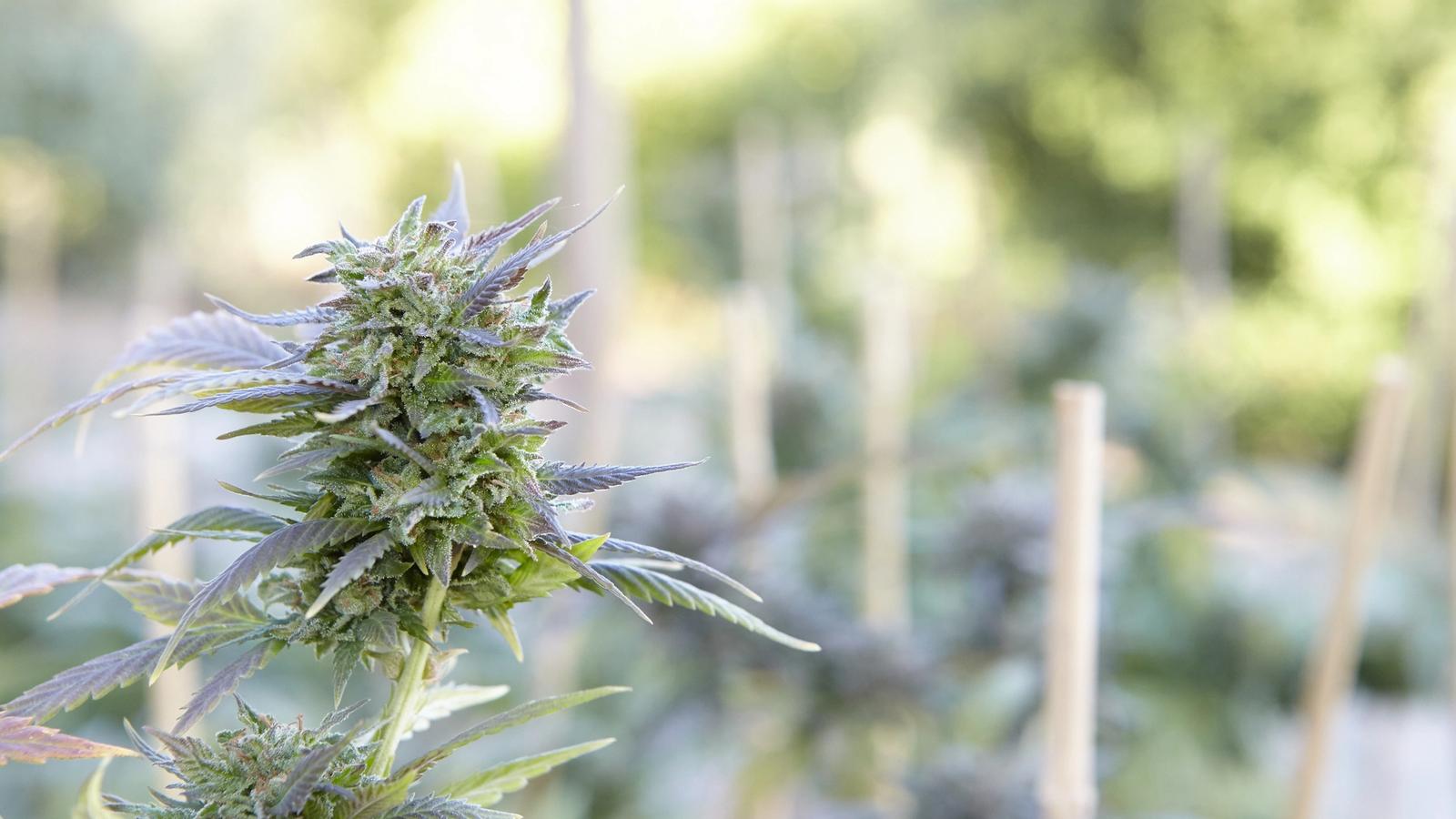
While much of the industry struggled under high taxes and legal ambiguity, LEEF Brands spent years refining a vertically integrated model designed for maximum efficiency. The cornerstone of this strategy is the Salisbury Canyon Ranch in California. By focusing on sustainable and responsible farming practices, LEEF has achieved a remarkable $8 per pound biomass cost, providing a low-cost foundation that allows for the production of pesticide-free, pharmaceutical-grade concentrates at a price point few competitors can match.
Operational Excellence and "The Lab"
LEEF’s advantage extends beyond cultivation costs into technological sophistication. The company’s vision involves leveraging its extraction expertise to actually shape its cultivation practices, ensuring that the genetics it grows are specifically optimized for superior finished goods.
LEEF’s state-of-the-art processing facility, known as "The Lab," merges high-end purification with industry-leading formulation practices. This technical depth has allowed the company to become a trusted partner for white-label services, providing the expertise needed for other brands to launch and scale efficiently. This dual-track approach of building its own premium consumer brands while acting as a manufacturer for the broader industry positions LEEF as a foundational piece of the cannabis supply chain.
Financial Inflection and Market Expansion
The financial results for H2 2025 confirm that this model is having significant impact even though Salisbury Ranch was only producing on 65 of its 180 fully licensed acres. During the second half of 2025, reflecting the impact of that limited cultivation, margins increased to 41.4% from 19.7% the prior year. Along with 22.1% annual revenue growth last year, the improved margins pushed LEEF’s gross profit up 36.5% year-over-year. Crucially, the company achieved positive operating cash flow of $1.3 million during this period (compared to -$2.4 million the year prior), a milestone that differentiates it from much of its peer group.
Furthermore, LEEF has demonstrated that its California-born expertise is portable. In September 2025, the company officially launched operations in New York, executing a dual-state strategy in the nation's two most influential cannabis markets. This expansion was supported by a strengthened balance sheet, including an early debt conversion in late 2025 that cleared the path for future growth.
A Foundation for Valuation Appreciation
With federal rescheduling on the horizon, the conversation regarding cannabis investment is moving away from survival and toward valuation expansion. For a company like LEEF Brands, federal reform represents "optionality" through the ability to take its low-cost, pesticide-free concentrates and supply them to the broader U.S. and eventually global markets.
LEEF’s emerging fundamentals, including profitability, low-cost production at scale, and a strategic presence in high-value states, suggest that the company's current business value is significantly decoupled from its future potential. As the industry enters this new era of federal legitimacy, companies that control their own supply chains and maintain superior margins are the ones positioned to see substantial appreciation as institutional capital enters the space.
Conclusion
Imminent rescheduling represents a fundamental change in the American economic landscape. As the political and legal pathways for the change become clear, the speculative phase of the industry is being replaced by an era of operational accountability.
LEEF Brands has already built the "Ranch" and the "Lab" necessary to lead this new phase. By merging pharmaceutical-grade quality with an $8 per pound production model, the company has created a resilient framework that is ready for the new reality of a federally-legal cannabis market. The game is finally beginning, and LEEF is already standing on a foundation of proven execution.
Author’s Disclosure: This article reflects the author’s independent analysis and personal views. It is not affiliated with or endorsed by LEEF Brands or any related party. The content is provided for informational purposes only and should not be considered financial or investment advice. Readers are encouraged to conduct their own independent research and due diligence before making any investment decisions.
This article reflects personal research and opinions and is provided for informational purposes only. It is not financial advice, a recommendation to buy or sell any security, or a consideration of your individual circumstances. Investing in small-cap and pre-commercialization companies involves significant risk, including the risk of total loss. Always do your own research and consider speaking with a qualified financial professional before making investment decisions.
Stay Informed with The Wire
Get the latest insights and analysis on public companies delivered directly to your inbox.