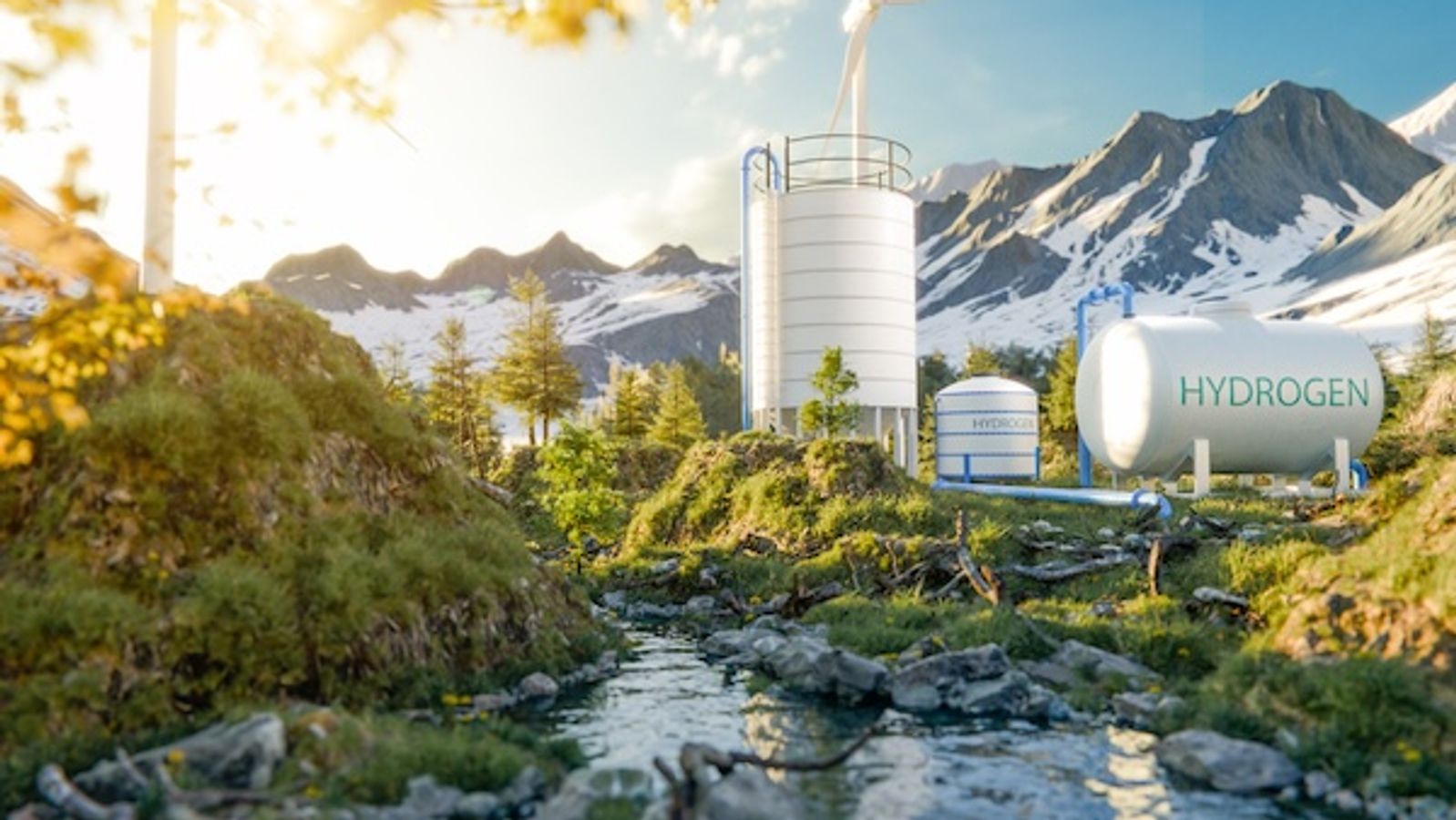
Micro‑Cap, First Mover: CHARBONE’s Flagship Quebec Plant as a Template for Distributed Green Hydrogen
Charbone’s Sorel-Tracy facility shifts green hydrogen from concept to commercial reality, launching production in Québec using hydropower and modular design. With phased scaling and offtake agreements, it targets local industrial demand. The strategy: prove a small, contracted model works, then replicate regionally—offering investors higher-risk, early-stage exposure to distributed green hydrogen.
For all the hype around green hydrogen, very few North American names at the micro‑cap end of the market have actually built and started delivering from a real plant. That’s what makes the Sorel-Tracy flagship project, from CHARBONE (TSXV: CH) (OTCQB: CHHYF) (FSE: K47) interesting: it turns the story from a slide deck about “future capacity” into one about molecules in the field, contracts, and a blueprint that could be copied in other regions. Instead of betting everything on a single mega‑project or speculative export terminal, Charbone is trying to prove that a smaller, modular plant anchored by local industrial demand can work right now, and then use that as a template for a network.
The core of that template is Sorel‑Tracy, a green hydrogen facility in Québec designed from day one to lean on the province’s abundant hydropower. The plant commenced commercial production in December 2025. The idea is simple but powerful: pair an electrolyser with a low‑carbon grid, produce ultra‑high‑purity hydrogen on site, compress and distribute it locally, and skip the complexity of shipping energy across oceans. Charbone has structured the project in phases, with an initial build producing in the hundreds‑of‑kilograms‑per‑day range and the ability to scale toward multi‑tonne‑per‑day output over time. For a small company, that stepwise approach matters, letting them test operations, iron out logistics, and bring in revenue before committing to the full nameplate capacity.
On the commercial side, the company isn’t just producing hydrogen and hoping buyers show up. It has targeted existing industrial gas demand in the region and structured offtake agreements to pre‑sell a meaningful slice of early output. That puts the project closer to a contracted, “utility‑like” model than a pure merchant gamble. For local customers like metal processors, light industry, mobility pilots, and backup power applications, green hydrogen from Sorel‑Tracy can substitute for delivered grey hydrogen or other industrial gases with relatively minor changes to their operations, while helping them tick decarbonization boxes. For Charbone, those contracts help de‑risk cash flow and create a reference case they can show to lenders, partners, and regulators in other jurisdictions.
The technology set is intentionally conservative. Rather than trying to push the envelope with unproven electrolyser chemistries, Charbone’s model pairs a well‑known electrolyser platform with standard compression, storage, and distribution equipment. That choice lowers technology risk and makes it easier to replicate the design elsewhere: once you’ve shown that one package works reliably under Québec’s conditions, you can adapt the same playbook, often with the same suppliers, to other sites near cheap, low‑carbon power. In a sector where many projects stall because they try to innovate on every front at once (new tech, new business model, new market), sticking to familiar equipment and innovating on siting and contracts is a feature, not a bug.
Investor’s Point of View
What does this mean from an investor’s perspective? First, it changes the kind of risk you’re taking. You’re no longer backing a pre‑revenue development story with a long list of “ifs” between here and first production; you’re looking at a company that has turned on a real plant, signed buyers, and can point to operational data, even if at modest scale.
Second, it creates a clearer path to value creation: if Sorel‑Tracy performs as expected, the upside is in how quickly Charbone can clone that model along other industrial corridors in Eastern Canada and the US Midwest, not in whether the basic concept works at all. Each additional site could, in theory, be financed and structured on slightly better terms, using the flagship as proof of concept.
Of course, this is still a small, early‑stage name. The balance sheet, execution capacity, and access to capital will matter just as much as the technical story. Scaling from one plant to a true network requires disciplined project selection, partner alignment, and a careful approach to leverage.
But in a green hydrogen universe dominated by mega‑projects that may or may not reach final investment decision, Charbone’s “start small, prove it, then replicate” strategy via its Québec flagship gives investors a different way to play the theme: a higher‑risk, higher‑beta option on distributed, locally anchored green hydrogen, with the first real‑world asset already in the field rather than still on the drawing board.
Author’s Disclosure: This article reflects the author’s independent analysis and personal views. It is not affiliated with or endorsed by CHARBONE Corporation or any related party. The content is provided for informational purposes only and should not be considered financial or investment advice. Readers are encouraged to conduct their own independent research and due diligence before making any investment decisions.
This article reflects personal research and opinions and is provided for informational purposes only. It is not financial advice, a recommendation to buy or sell any security, or a consideration of your individual circumstances. Investing in small-cap and pre-commercialization companies involves significant risk, including the risk of total loss. Always do your own research and consider speaking with a qualified financial professional before making investment decisions.
Stay Informed with The Wire
Get the latest insights and analysis on public companies delivered directly to your inbox.